Finding the right partner to bring your hair care vision to life is one of the most critical decisions an entrepreneur or brand manager can make. The shampoo market is highly competitive, and the quality of your formula is what turns a one-time buyer into a loyal customer.
Choosing a shampoo OEM manufacturer (Original Equipment Manufacturer) involves more than just finding a factory with a mixing vat. It’s about finding a partner that aligns with your brand values, quality standards, and growth trajectory. Here is a comprehensive guide on how to choose the right manufacturing partner, featuring insights from the industry experts at Jindao Shampoo Factory.
1. Prioritize Research and Development (R&D) Capabilities
In the beauty industry, “off-the-shelf” formulas are a dime a dozen. However, if you want your brand to stand out, you need a manufacturer with a robust R&D department.
A top-tier shampoo OEM manufacturer should offer:
- Custom Formulation: The ability to create unique scents, textures, and active ingredient profiles.
- Ingredient Expertise: Knowledge of trending ingredients like biotin, caffeine, or sulfate-free alternatives.
- Stability Testing: Ensuring the product doesn’t separate or change color over time.
Jindao Shampoo Factory emphasizes that a manufacturer should be an innovator, not just a processor. They should be able to tell you why a certain ingredient works and how to optimize it for your target audience.
2. Verify Certifications and Quality Control
Your brand’s reputation is only as good as the safety of your product. Before signing any contracts, verify that the manufacturer adheres to international standards. Look for certifications such as:
- ISO 22716: The standard for Good Manufacturing Practices (GMP) for cosmetics.
- GMPC: Essential for brands looking to export to international markets.
Ask about their quality control (QC) process. Do they test raw materials upon arrival? How often do they inspect the production line? A transparent manufacturer will be happy to share their documentation and invite you for a site visit.
3. Production Capacity and Scalability
Your needs today might be 1,000 bottles, but what happens when a social media influencer goes viral with your product and you suddenly need 50,000?
When vetting a shampoo OEM manufacturer, ask about:
- Minimum Order Quantities (MOQs): Ensure their entry point matches your budget.
- Lead Times: How long does it take from order placement to shipping?
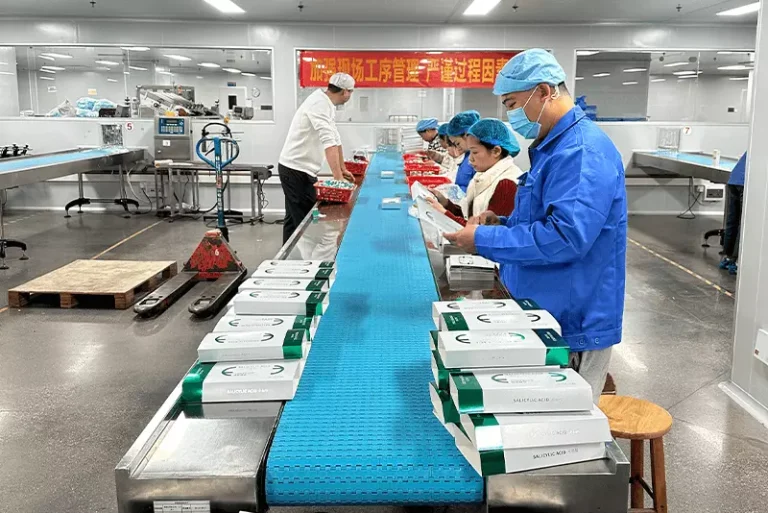
- Equipment: Do they have high-speed filling lines and automated labeling?
Choosing a partner like Jindao Shampoo Factory ensures that you have the “room to grow.” You want a factory that can handle small-batch artisanal runs while possessing the industrial muscle for mass-market distribution.
4. Full-Service Support (More Than Just Mixing)
The best OEM partners provide “turnkey” solutions. Manufacturing the liquid is only half the battle; you also need to consider packaging, labeling, and logistics.
A comprehensive manufacturer should assist with:
- Packaging Sourcing: Finding the right bottles, pumps, and sustainable materials.
- Regulatory Compliance: Helping you navigate ingredient labeling laws and claims (e.g., “tear-free” or “organic”).
- Design Integration: Ensuring your brand’s aesthetic translates well onto the physical container.
Quick Comparison Checklist
| Feature | What to Look For | Why it Matters |
| Lab Facilities | In-house chemists | Allows for unique, proprietary formulas. |
| Sourcing | Ethical ingredient supply | Protects your brand from PR scandals. |
| Communication | Dedicated account managers | Prevents delays and misunderstandings. |
| Transparency | Open-door factory policy | Builds trust in the production process. |
5. Communication and Cultural Fit
Technical specs are vital, but don’t overlook the “human element.” You are entering a long-term relationship. Is the manufacturer responsive? Do they understand your brand’s voice?
If a manufacturer is slow to answer emails during the sales phase, they will likely be even slower when there is a production hiccup. Jindao Shampoo Factory believes that clear communication is the foundation of a successful OEM partnership. They act as a consultant, helping you avoid common pitfalls in the manufacturing process.
Conclusion
Choosing the right shampoo OEM manufacturer is the bridge between a great idea and a successful product. By focusing on R&D, rigorous quality standards, scalability, and full-service support, you can ensure your brand enters the market with a superior product.
Remember, your manufacturer is the silent partner in your success. Take the time to choose one that values quality and innovation as much as you do.